
Chicken Road employs a farm theme that looks straightforward and transforms it into a slot where the grid layout and feature triggers matter more than you may anticipate. The game does not employ a set 5×3 panel. Instead, the layout may change, with rows increasing during bonus rounds and directly altering how many win lines are active. The visuals lean into a countryside environment: a hen travels across a dusty road while avoiding traffic, and the entire game has a light, whimsical atmosphere. Under that playful surface rests a medium-to-high volatility maths model, so wins do not occur on each spins, but they may build fast when the proper symbol groups and modifiers land together. Any UK player who wants to get a understanding on the slot’s risk before putting down real money needs to comprehend how the base game grid and the special features interact. The sections below walk through each mechanical aspect in detail.
The Farmyard Theme and Narrative Design
Chicken Road creates its world around a hen striving to cross a busy road, a premise that appears recognisable to British players habituated to countryside humour. The reels rest against rolling green hills, wooden fences, and a winding tarmac lane, with warm yellows, earthy browns, and vivid greens performing most of the visual work. The symbols narrate the story: the chicken herself is the highest-paying icon, while lower-value tiles contain traffic cones, car tyres, feed buckets, and playing card suits reimagined with farm textures. The audio combines upbeat banjo plucks with the odd squawk and engine rumble, so it keeps cheerful without becoming annoying over a long session. Animations look sharp, especially when the chicken dashes across the screen and deposits a trail of golden feathers to announce a feature. That coherent theme offers the slot a personality that shines among the endless fruit machines and ancient civilisation titles, and it links directly to the bonus mechanics.
The visual storytelling is not just ornamentation; it offers players subtle cues about what condition the game is in. When the chicken gets to the other side of the road in a special animation, a feature is about to trigger. The road itself acts as a visual metaphor for the expanding grid: crossing safely implies more rows and bigger potential rewards. Even the symbol design adheres to a clear hierarchy, with the most valuable icons depicted in detail, such as the chicken’s feathers ruffling in the wind, while low-value symbols remain still. This assists newcomers spot which combinations to wish for without constantly checking the paytable. A UK audience accustomed to slots that harmonise charm with function will find the presentation appealing and easy to read, though the real depth resides in how the theme links into the grid mechanics detailed later.
Wilds, Bonus scatters, and Special icons
The Chicken wild symbol and Its replacement rules
The wild icon in Chicken Road features the hen directly in a lively pose, usually shown mid-stride across the road. This wild substitutes for all standard paying symbols, assisting in finishing or lengthen winning combinations that would be one symbol short. The wild does not substitute for the scatter symbol or any special bonus symbols, so bonus triggers depend entirely on landing the necessary count of scatters without wild help. In the regular game, wilds show up on specific reels, typically reels 2, 3, and 4, although the precise location can change. Throughout free spins, wilds can appear more often or acquire additional features, such as having a random 2× or 3× multiplier. When several wilds are part of the identical payline, their multipliers can combine, producing payouts significantly bigger than the standard icon values suggest.
Scatter signs and Triggering the Feature
The scatter https://www.skysports.com/racing/news/12426/13195330/today-on-sky-sports-racing-flat-stars-on-show-at-lingfield-on-tuesday symbol appears as a gold egg or a road sign, based on the version, and its main purpose is to activate the free spins feature. Getting three or more scatters in any position on the grid activates the bonus round, and the count of given free spins usually rising with the scatter count. As an illustration, three scatters might grant 10 free spins, four scatters 15, and five scatters 20 or more. Scatters also pay an immediate cash reward amounting to a multiplier of the total bet, typically ranging from 2× for two scatters as high as 50× or 100× for five. This quick payout is given out before the free spins begin, so players get an instant payout whatever the bonus round turns out. Since scatters award in any spot and do not require adjacency, they form a additional dimension of expectation on every spin, unrelated to the main ways-to-win structure.
Maximum Win Potential and Hit Frequency
Chicken Road’s highest payout ceiling is a essential metric for anyone sizing up the slot’s upside. Specific amounts depend on game version and operator settings, but the maximum reward often ranges from 5,000× and 10,000× the total bet. A £1 spin could potentially return £5,000 to £10,000 in ideal circumstances, though such scenarios are rare and usually necessitate a fully expanded grid with a high multiplier running during free spins. The cap is enforced as a hard limit: if a single spin or feature sequence surpasses the maximum, the excess is forfeited. This ceiling safeguards the game’s maths model while still offering a meaningful target for players chasing large wins. UK players should verify the exact cap in the paytable, because some casinos offer versions with lower limits to manage risk.
Payout rate, the frequency at which any win takes place, shifts noticeably between the base game and the bonus round. In standard 5×3 play, the hit rate might be close to one in four or five spins, with most payouts being humble multiples of the bet. When the grid enlarges and multipliers kick in, hit frequency can rise, sometimes past 30%, because extra rows create more symbol positions and ways to win. But typical win size during features also rises, so overall volatility continues high. Players should not mistake a higher hit frequency during free spins with a low-risk phase; the round can still conclude below average if the multiplier trail fails to move. Prudent bankroll management means setting bets so a session can survive the base game’s dry periods and still take advantage of the feature when it appears.
- Base game hit frequency: approximately 20% to 25%, with predominantly small wins.
- Free spins hit frequency: can go beyond 30% due to expanded grid, but win sizes vary widely.
- Maximum win cap: usually between 5,000× and 10,000× the stake, verified in the paytable.
- Multiplier trail during free spins: starts at 1×, can increase to 10× or higher, boosting late-round wins.
- Volatility classification: medium-to-high, implying extended dry spells are typical.
Special Features: Complimentary Spins and Multiplier Effects
Starting the Free Spins Round
The bonus spins feature is positioned at the core of Chicken Road Road’s bonus feature, and its activation sequence is designed to build suspense. When three or additional scatter symbols show up, the screen often darkens briefly, the chicken character animates crossing the road, and a transition display shows the count of granted free spins. Before the round commences, the grid could already seem different, including one or two extra rows as a foretaste of the upgraded layout. Players do not have to make an extra bet; the free spins play out at the bet that was in effect when the feature triggered. During the round, the enlarged grid remains in place, and any retrigger conditions, typically hitting additional scatters, can contribute more free spins to the outstanding count, often with further row enlargements. This layering mechanic signifies one feature can expand from a modest 10-spin round into a lengthy session with a fully maximised grid.
Multiplier Track and Progressive Enhancement
Many versions of Chicken Road feature a multiplier trail that advances with each consecutive win or each scatter gathered during free spins. The trail could begin at 1× and climb in steps (2×, 3×, 5×, 10×), peaking at a highest multiplier that then is applied to all later wins in the feature. Each step typically aligns with a visual marker on the road, with the chicken moving further along the track. This gradual multiplier is not linked to a single spin; it accumulates and remains for the remainder of the free spins, so late wins can be boosted by a much higher factor than early ones. Some versions also have a “chicken dash” random event where the multiplier leaps several steps at once, introducing some uncertainty. The mix of an expanded grid and a increasing multiplier creates the slot’s greatest payout potential, and a single spin can provide a win amounting to several hundred times the stake when both mechanics max out together.
Grid Setup and Symbol Layout
Basic Game Layout
In its default state, Chicken Road uses a 5-reel, 3-row grid, the identical baseline many UK players know from hundreds of other video slots. This layout gives you 15 visible symbol positions after every spin. Winning combinations appear when matching symbols appear on adjacent reels, starting from the leftmost reel, across one of the active paylines or ways depending on the engine variant. The compact 5×3 setup keeps the base game simple, so the volatility appears through symbol frequency instead of a flood of positions. During normal spins the grid stays unchanged, and no cascading or tumbling mechanics reorganize the cells after a win. That stability simplifies to track results and control a budget without sudden structural shifts.
Extended Rows During Features
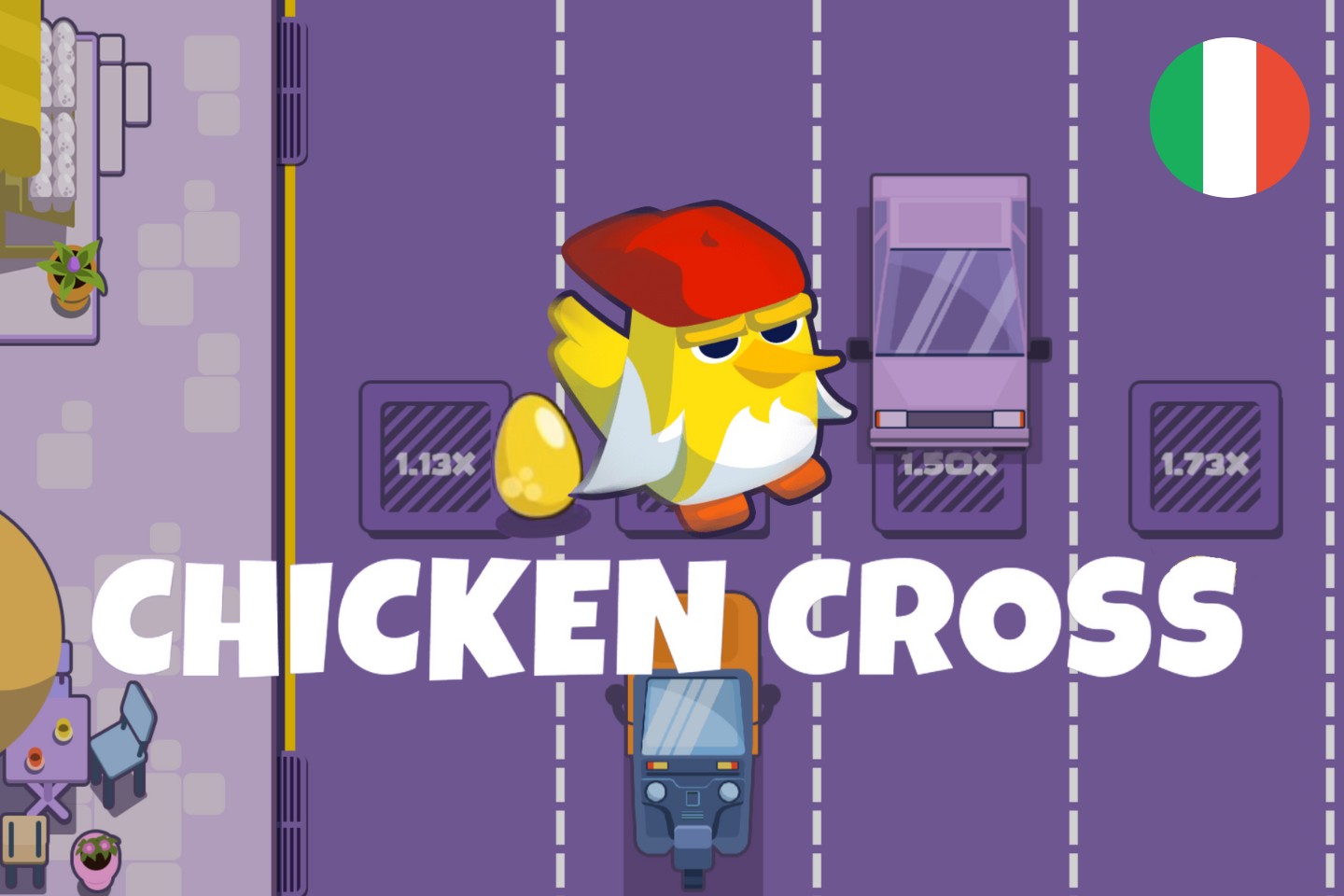
The grid displays its personality once the bonus rounds kick in. Once free spins activate, the layout can expand upward, adding extra rows to certain reels or across all five. A common setup has the grid increase from 5×3 to 5×4 or 5×5, which dramatically boosts the number of symbol positions and, in turn, the ways to win. The expansion is not haphazard; it generally follows a progression linked to how many scatters appeared or a multiplier trail the chicken moves along. Each new row introduces more symbol slots, and the game recalculates active ways instantly. Anyone who has experienced a Megaways engine will identify the principle, though Chicken Road uses it in a more controlled and foreseeable way. The expanded grid remains active for the whole free spins round, then reverts to the standard 5×3 once the feature finishes, keeping the base game consistent.
Wager Options and Wager Flexibility
The wagering interface in Chicken Road accommodates a diverse range of UK players, from cautious newcomers trying it out to experienced punters chasing higher stakes. The minimum bet usually kicks off at £0.20 per spin, which allows lengthy rounds without exhausting a limited balance too quickly. At the high end, the maximum bet can go up to £100 or more, though the precise limit depends on the casino platform running the game. This range works for diverse risk profiles and remains usable on mobile, where a more straightforward bet picker matches mobile displays. Bet change typically runs through a coin value multiplier or a total-bet slider, and any change promptly adjusts the shown possible payouts in the paytable, enabling players see how their stake alters the prize for each symbol combination.
One useful point is that the chosen stake stays locked when the grid enlarges during free spins, so there are no unexpected cost hikes mid-feature. That transparency matters for UK players who adhere to healthy gaming routines and want to set clear loss limits before a session. The game also often offers an autoplay function with adjustable loss and single-win stop conditions, though presence changes by jurisdiction. With autoplay active, the bet per spin stays uniform, and any free spins triggered use the same stake that started them. This maintains the theoretical payout steady and enables players calculate session costs based on their picked stake level and the slot’s variance pattern.
Return to Player (RTP) and Risk Profile
Chicken Road features a theoretical Return to Player (RTP) that typically sits around 96%, aligning with the industry average for modern video slots designed for the UK market. This percentage indicates the long-term expected payback across millions of spins and does not guarantee short-term results. Some versions may offer marginally different RTP settings, like 94% or 95%, based on operator configuration, so players should always consult the in-game information panel or help file for the exact figure before depositing. The RTP is determined over the full game cycle, encompassing base game play and all bonus features, meaning free spins and multiplier rounds contribute significantly to the overall return. A session that never activates the main feature will probably fall below the theoretical RTP, while a lucky run of expanded-grid free spins can boost returns well above it for a time.
The volatility, or variance, is best described as medium-to-high. In practice, the slot does not pay out small, frequent wins as often as a low-variance title. Dry spells can happen, but wins tend to be larger when they arrive, notably when grid expansion and multiplier features align. Hit frequency, the share of spins that yield any win, is estimated near 20% to 25%, though it differs with the active grid size. During the base game, players may experience stretches of 15 to 20 non-winning spins, which can challenge patience. A single feature round can deliver 50 to 200 times the stake, which offsets the leaner periods. UK players who like a steady stream of smaller returns should be careful, while those comfortable with more risk in search of bigger peaks will discover the profile fits.
Payline Structure and Methods to Win
Chicken Road uses a variable ways-to-win system rather than fixed paylines, so a victorious combination applies as long as matching symbols sit on adjacent reels from left to right, no matter their vertical location. In the basic 5×3 layout, that gives a fixed number of ways, usually 243, calculated by multiplying the rows on each reel (3×3×3×3×3). When the grid enlarges during features, the ways figure multiplies. A entire 5×4 layout delivers 1,024 ways, and a 5×5 grid increases that to 3,125 ways. This scaling has a direct effect on hit frequency and payout size, because more ways lead to a greater likelihood of achieving at least one winning line per spin. The game compensates this by altering symbol distribution so the highest-value icons remain comparatively scarce.
Comprehending ways-to-win is crucial for bankroll management. On a fixed-payline slot you can frequently select how many lines to play, but here every potential left-to-right adjacent combination is routinely active. The total bet purchases access to all ways, so the cost per way decreases as the grid expands during features, practically giving more coverage for the same stake. Scatter symbols and particular bonus icons pay apart of the ways structure, granting prizes based on the total bet as opposed to line multipliers. This dual approach, regular symbols on ways and scatters separate, creates a layered reward system where one spin can provide both a line win and a scatter-triggered feature, adding excitement without turning the rules overly complicated.
Essential Gameplay Mechanics and How to Spin
Starting a round on Chicken Road uses a common sequence, but a few details are worth paying attention to. After the game loads, set the total bet with the plus and minus buttons or a slider, then press the central spin button or tap the screen on mobile. The reels spin and stop one by one, showing a new arrangement of symbols. Wins are evaluated instantly: the game scans for matching symbols on adjacent reels from left to right, highlights winning combinations, and adds the payout to the balance. The paytable, opened through an “i” or menu icon, shows the value of each symbol at the current bet level, expressed as a multiplier of the total stake or as a cash amount. This dynamic display relieves players from manual calculations.
Beyond manual spins, the game typically offers an autoplay mode where players can set a number of automatic spins and optional stop conditions. A turbo or fast-spin option may also be available to cut animation time between results. These tools do not alter the underlying mathematics; they just change the pace. One mechanical detail involves the scatter symbol, which pays a multiple of the total bet when two or more land anywhere on the grid, independent of paylines. A single spin can therefore produce both a regular line win and a scatter payout at the same time, and if three or more scatters appear, the free spins feature triggers. Grasping this dual-payout potential helps make sense of session results, because a modest line win can be boosted by a concurrent scatter prize.
Useful Tips for UK Players Tackling the Grid
Before investing real money, spend time in demo mode if it is available, and observe how the grid expansion and multiplier trail act over several hundred spins. Hands-on time reveals the typical gap between feature triggers and aids set realistic expectations for session length. Note the paytable’s dynamic display, which adjusts symbol values based on the selected bet. Many UK players overlook this, but it offers the clearest picture of what each combination actually pays. When moving to real-money play, start with a bet size that allows at least 100 to 150 spins within a pre-set loss limit; this buffer increases the chance of reaching a bonus round without depleting the bankroll first. Do not chase the feature by raising stakes after a dry spell, because the random number generator has no memory and each spin is independent.
During free spins, the inclination to pursue the multiplier trail is reasonable, but the true value lies in knowing when the grid has reached maximum expansion. Once all rows are active, every spin after that runs at peak ways-to-win capacity, and any multiplier increase adds pure upside. If the feature includes a gamble option for extra free spins, treat it with care: losing the entire bonus often exceeds the possible gain, especially with the slot’s already high volatility. Finally, always check the specific RTP and max win cap on the casino platform hosting Chicken Road, because these figures can vary. A few minutes spent reviewing the game rules and paytable can prevent misunderstandings about what the slot offers and keep the session aligned with your personal risk tolerance.
- Try the game in demo mode to gauge feature frequency and grid behaviour.
- Choose a bet size that provides at least 100–150 spins within your session budget.
- Review the in-game paytable for the exact RTP, max win cap, and symbol values at your stake.
- During free spins, observe when the grid reaches full expansion; every spin thereafter carries maximum potential.
- Avoid raising stakes after losses; the slot’s volatility does not respond to betting patterns.
Chicken Road’s grid layout and mechanics benefit players who invest the time to understand how the expanding rows, ways-to-win system, and multiplier trail combine. The slot does not lean on complicated side games or obscure rules; it layers a few clear features onto a familiar foundation, building a profile that appeals to people who like medium-to-high volatility with a realistic path to substantial payouts. The base game remains straightforward and the excitement centers in the free spins round, providing every session a distinct rhythm. For UK players looking for a slot that pairs a light-hearted theme with real mechanical depth, Chicken Road is a practical, analytically sound choice deserving attention with a measured approach.
